Influencer Marketing ROI: How to Measure Success
Influencer marketing has become a powerful way for brands to connect with audiences in a more personal and authentic way. However, simply working with popular creators does not guarantee strong results. Businesses need to understand whether their campaigns generate meaningful returns and support wider marketing goals. That is where measuring influencer marketing ROI becomes essential.
A well planned influencer marketing strategy helps businesses choose suitable creators, reach the right audience and track campaign performance. More importantly, it allows brands to understand what works and where they can improve. Whether the goal involves increasing sales, building awareness or generating website traffic, the right measurements can turn influencer activity into a valuable marketing investment.
What Is Influencer Marketing ROI?
Influencer marketing ROI refers to the return a business receives from the money and resources invested in an influencer campaign. In simple terms, it helps answer one important question: did the campaign create enough value to justify the investment?
However, ROI does not always mean immediate sales. For example, a campaign may introduce a new jewellery brand to thousands of potential customers without generating purchases on the same day. Nevertheless, those people may remember the brand and purchase later.
Therefore, businesses should measure both direct and indirect results. Sales, leads and website visits provide clear performance data, while engagement, brand awareness and audience growth can show longer term value. Together, these metrics provide a more complete picture of campaign success.
Set Clear Goals Before Your Campaign

Before launching an influencer campaign, decide exactly what you want to achieve. Otherwise, it becomes difficult to determine whether your investment produced worthwhile results.
For example, an online jewellery business might want to increase product sales, while a new fashion brand may focus on building awareness. Similarly, a restaurant could aim to increase bookings, whereas a service business may want more enquiries.
Once you establish the main objective, choose measurements that directly support it. If sales represent the priority, monitor conversions and revenue. If awareness matters more, focus on reach, impressions and audience growth.
Additionally, set realistic targets before contacting creators. This gives your influencer marketing strategy a clear direction and makes campaign analysis much easier after the promotion ends.
Track Reach and Impressions
Reach and impressions are useful when your main objective involves increasing brand visibility. Reach measures the number of unique people who see your content, while impressions indicate how many times the content appears on screens.
These figures can help you understand how effectively an influencer introduces your brand to a new audience. However, a large reach does not automatically mean a successful campaign. An influencer might have thousands of followers, but their audience may not match your target customers.
Therefore, always consider relevance alongside audience size. A creator with a smaller but highly engaged audience can sometimes produce better results than a celebrity with millions of followers. Ultimately, the quality of the audience matters just as much as its quantity.
Measure Engagement Carefully
Engagement shows how actively audiences interact with influencer content. Likes, comments, shares, saves and replies can all provide useful insights into audience interest.
For instance, a post with thousands of views but very little interaction may not create meaningful interest. On the other hand, a post with fewer views but strong conversations could indicate that the creator has a genuinely interested audience.
Engagement rate can help you compare different creators more effectively. You can calculate it by dividing total engagements by reach or impressions, depending on the data available.
Moreover, pay attention to the quality of comments. Genuine questions, product discussions and recommendations often provide more useful information than simple reactions. As a result, engagement should never become a numbers game alone.
Monitor Website Traffic
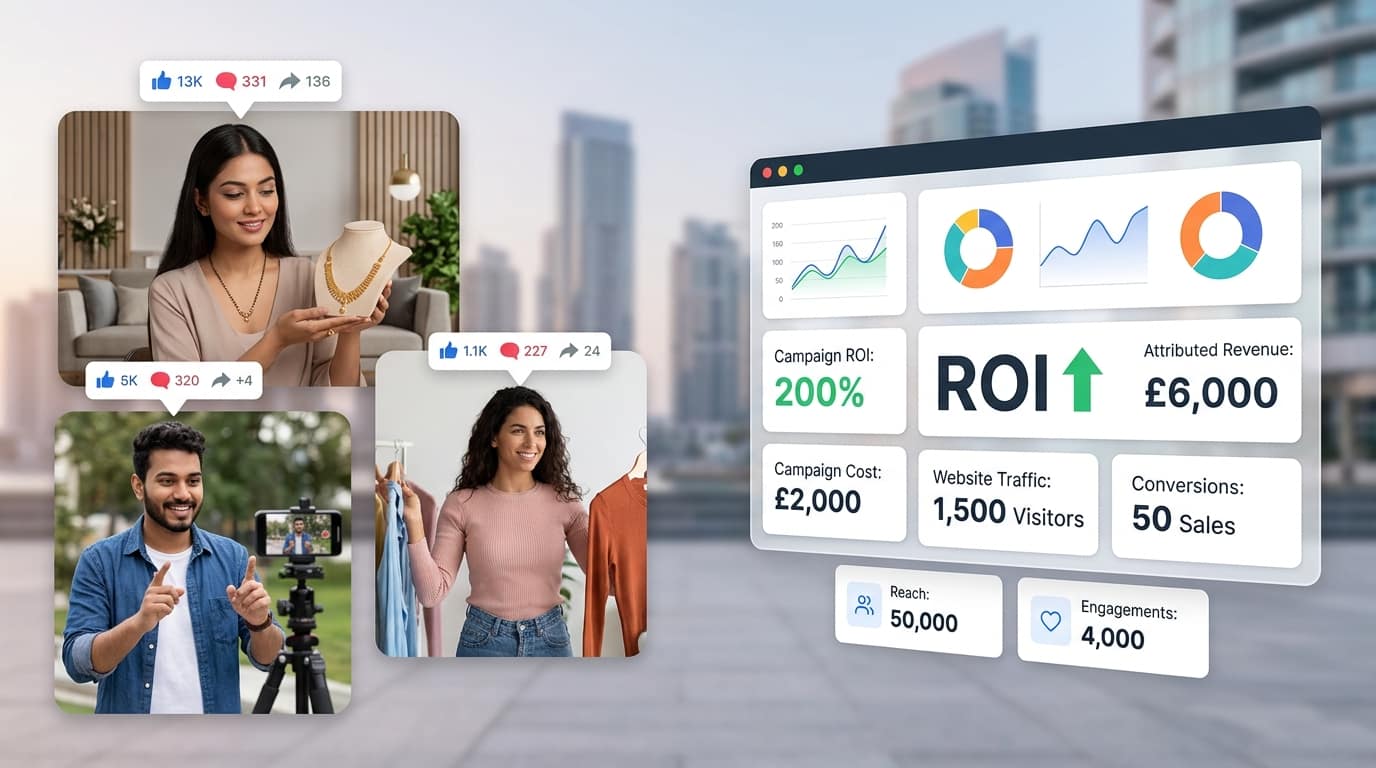
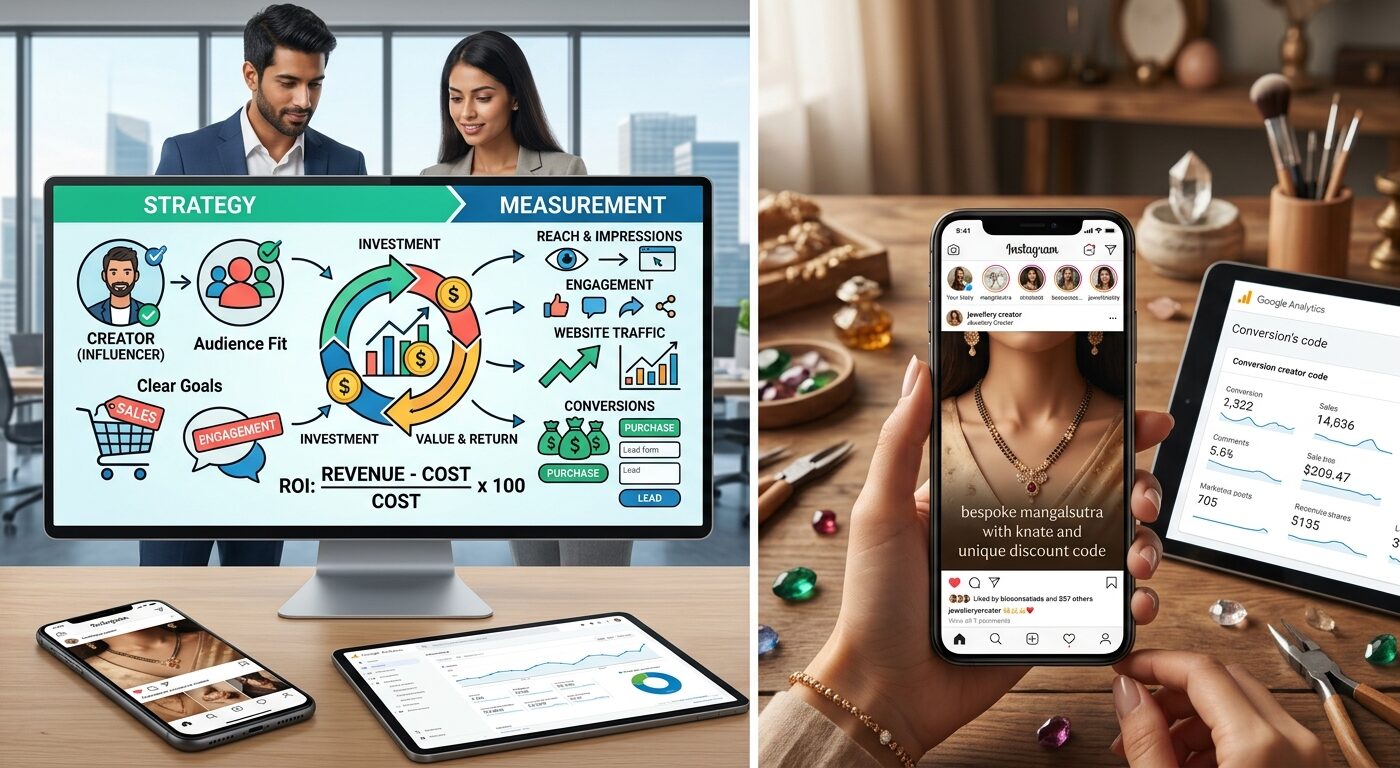
Website traffic provides another practical way to measure influencer campaign performance. By using unique tracking links for each creator, you can identify exactly how many visitors arrive through their content.
Google Analytics and similar platforms can then help you monitor visitor behaviour. You can see which pages users visit, how long they stay and whether they complete important actions.
For example, if an influencer promotes a bespoke jewellery collection, you can track how many people visit the collection page through their unique link. You can then compare that traffic with other marketing channels.
Additionally, businesses can use UTM parameters to identify traffic from individual campaigns and creators. This makes reporting more accurate and helps you understand which partnerships deserve further investment.
Measure Conversions and Sales
For many businesses, conversions provide the clearest indication of campaign success. A conversion could involve a purchase, enquiry, booking, newsletter subscription or another valuable action.
Influencer discount codes offer a simple way to track purchases. Give each creator a unique code, then monitor how many customers use it during the campaign. Similarly, unique landing pages can help attribute leads or sales to specific influencers.
However, remember that customers do not always purchase immediately. Someone might discover your brand through an influencer, research it later and eventually make a purchase through a search engine.
Consequently, businesses should consider the customer journey rather than relying solely on last click attribution. This approach can provide a more realistic understanding of an influencer’s contribution to revenue.
Calculate Your Influencer Marketing ROI
Once you collect your campaign data, you can calculate ROI using a straightforward formula:
ROI = (Revenue generated minus Campaign cost) ÷ Campaign cost × 100
For example, suppose a business spends £2,000 on an influencer campaign and generates £6,000 in directly attributed revenue. The calculation would show a 200% ROI.
Nevertheless, revenue represents only one part of campaign value. You may also gain valuable content, new followers, website traffic and increased brand recognition. Therefore, consider these additional benefits when assessing the overall commercial impact.
A professional digital marketing agency can also help businesses establish tracking systems and interpret campaign data. This can make it easier to compare influencer marketing with other acquisition channels.
Consider Content Quality and Brand Fit
Numbers matter, but they should not become the only measure of success. The quality of influencer content can influence how audiences perceive your brand long after the campaign finishes.
Strong content should feel natural to the creator while still communicating your brand message accurately. Furthermore, the influencer should have an audience that genuinely aligns with your products or services.
For example, a creator who regularly discusses weddings and personal style could be a strong match for a bespoke mangalsutra brand. Their audience may already have an interest in jewellery, celebrations and related purchases.
In contrast, choosing an influencer solely because they have a large follower count could lead to weak engagement and limited commercial results. Therefore, relevance, credibility and content quality should remain central to your selection process.
Compare Influencers and Campaigns
After completing several campaigns, compare their results to identify patterns. Look at engagement rates, traffic, conversions, revenue and overall campaign costs.
You may discover that micro influencers generate more sales per pound than larger creators. Alternatively, you might find that certain platforms produce stronger website traffic or better engagement for your particular audience.
This information can improve your future influencer marketing strategy. Instead of choosing creators based on assumptions, you can use previous performance data to make more informed decisions.
Furthermore, consider comparing campaign results against other marketing activities. A digital marketing agency can help analyse these figures alongside SEO, paid advertising and social media performance, giving you a broader view of your marketing investment.
Use Data to Improve Future Campaigns
Measuring ROI should not be the final step. The real value comes from using the information to improve your next campaign.
Review which creators produced the strongest results, which content formats attracted the most engagement and which calls to action generated conversions. Then use those insights when planning future collaborations.
Also, give successful creators opportunities to develop longer term partnerships. Audiences often respond well when creators genuinely know and understand a brand rather than promoting it once.
For example, a jewellery company could work with the same creator across seasonal collections, wedding campaigns and gifting promotions. This can create stronger familiarity and potentially improve future results.
Final Thoughts
Influencer marketing can deliver impressive results when businesses approach it strategically and measure performance consistently. However, follower numbers alone cannot determine whether a campaign succeeded.
Instead, focus on goals, engagement, traffic, conversions, revenue and audience relevance. At the same time, consider the wider value created through content, awareness and long term customer relationships.
Ultimately, an effective influencer marketing strategy combines creative partnerships with reliable data. When you track the right metrics and learn from every campaign, you can make better investment decisions, improve performance and build influencer relationships that support sustainable business growth.
FAQ
You can measure ROI by comparing the revenue generated through an influencer campaign with the total campaign cost. However, also consider traffic, leads, engagement, content value and brand awareness.
There is no single metric for every campaign. Sales and conversions matter most for performance campaigns, while reach and engagement can become more important for awareness campaigns.
Yes. Smaller creators can have highly engaged and relevant audiences. Therefore, they may deliver stronger results than larger influencers when their audience closely matches your target customers.
Using unique links or discount codes can make campaign attribution much easier. It allows businesses to identify which creators generate traffic, leads and sales.