How Search Intent Shapes Digital Marketing for Bespoke Cultural Jewellery
Digital marketing for bespoke cultural jewellery works best when it begins with the reason behind a search, not simply the words typed into a search bar. A buyer looking for the meaning of a traditional design is at a different stage from someone comparing bespoke appointments, prices or delivery times. Treating those searches as equal can lead to attractive content that produces few serious enquiries.
For bespoke jewellers and cultural jewellery brands, search intent is especially important because purchases are often emotional, high value and connected to identity, family or ceremony. A strong strategy must respect that meaning while giving modern buyers the clarity they expect from a premium online experience.
When Digital marketing aligns the right keyword with the right page, brands can guide people from early research to consultation without forcing the sale. The result is a customer journey that feels informed, culturally aware and commercially purposeful.
Why Search Intent Matters in Digital Marketing
Search intent describes what a person is trying to achieve through a search. They may want to learn, compare, locate a specialist or make an enquiry. The wording may appear similar, but the expected result can be very different.
An informational search might ask what a symbol means or how a style is traditionally worn. A commercial investigation search may compare materials, makers or bespoke options. A high-intent query may include terms such as UK, bespoke, consultation, price or made to order.
Digital marketing should respond with suitable content. Educational searches need clear guides. Comparison searches need detailed collection pages and buying information. Enquiry-led searches need a focused landing page, proof of craftsmanship and a simple route to contact the jeweller.
Rankings alone do not guarantee commercial value. A page can attract a large audience while missing the people most likely to book a private consultation. Search intent helps brands judge relevance before volume.
Understand the Cultural Meaning Behind the Keyword

Cultural jewellery keywords are not ordinary product labels. They may describe marriage, family tradition, faith, regional identity or a ceremony that carries personal significance. Using them without understanding their meaning can make a luxury brand sound generic or careless.
Before creating content, clarify what the term represents, who uses it and whether variations exist between communities. Product descriptions should explain significance accurately without turning tradition into a decorative marketing theme.
Photography should also show the piece respectfully and in contexts that support its purpose. A culturally specific item can be presented with contemporary styling, but the story should not erase its origin.
A thoughtful Digital marketing strategy combines keyword research with cultural research. The goal is not simply to repeat a phrase. It is to understand what the buyer expects to find.
Match Keywords to the Right Stage of the Buyer Journey
Early-stage searches often centre on meaning, traditions, styles and materials. These are useful opportunities for educational articles that build familiarity without pushing for an immediate enquiry.
Middle-stage searches usually show comparison. A buyer may be deciding between gold purities, diamond settings, chain styles or bespoke and ready-made options. The website should offer detailed collection pages, buying guides, consultation information and examples of previous work.
High-intent jewellery searches are more specific. A phrase such as gold mangalsutra suggests that the buyer may be looking for a relevant supplier, design inspiration or a route to commission a piece. The landing page should make location, craftsmanship, materials, pricing expectations and the enquiry process easy to understand.
A digital marketing agency can help map these searches to suitable pages so a brand does not send every visitor to the homepage or use one collection page for every stage of the decision.
Build Pages Around the Decision the Buyer Is Making
Every page should answer one main intent. A cultural history article should educate. A collection page should help buyers compare styles. A bespoke service page should explain the commissioning process and encourage a qualified enquiry.
This separation improves clarity and allows each page to use the right tone. Educational content can be explanatory, while a high-intent landing page can be concise, reassuring and focused on action.
Bespoke jewellery SEO should include practical details such as consultation format, design stages, estimated timescales, metal choices, gemstone sourcing, pricing guidance and aftercare.
Luxury does not require mystery. Clear information can make a brand feel more considered because it reduces uncertainty without removing the personal nature of the service.
Use Brand Storytelling to Strengthen Relevance
Search intent should guide the page, but brand storytelling should make it memorable. Cultural jewellery buyers are often interested in who designed the piece, what influenced the form and how traditional meaning has been interpreted.
Stories should be specific. Instead of relying on broad phrases about timeless elegance, explain the craft, design choices and customer journey. Show sketches, material selection, setting work and final presentation where appropriate.
Digital marketing becomes stronger when these details appear consistently across search content, social media, email and consultation pages. The buyer should encounter the same values at every stage.
A culturally aware story should never simplify a tradition merely to make it easier to sell. The brand can be accessible and modern while still acknowledging complexity and difference.
Measure Enquiry Quality, Not Only Traffic
Traffic is useful, but it is not the final measure of success for a bespoke jeweller. A smaller number of relevant visitors may produce more value than thousands of people looking for general inspiration.
Track consultation bookings, bespoke enquiry forms, telephone calls, appointment requests and visits to key service pages. Review which search terms led to serious conversations and which pages assisted the enquiry.
Digital marketing reporting should also consider the value of the enquiry. A person asking about a bespoke commission with a clear timeline may be more commercially relevant than a visitor who reads several articles but never views a service page.
Use this information to guide future content. Develop pages that repeatedly lead to consultations and review high-traffic articles that produce no movement towards a service.
Build a Search Intent Framework
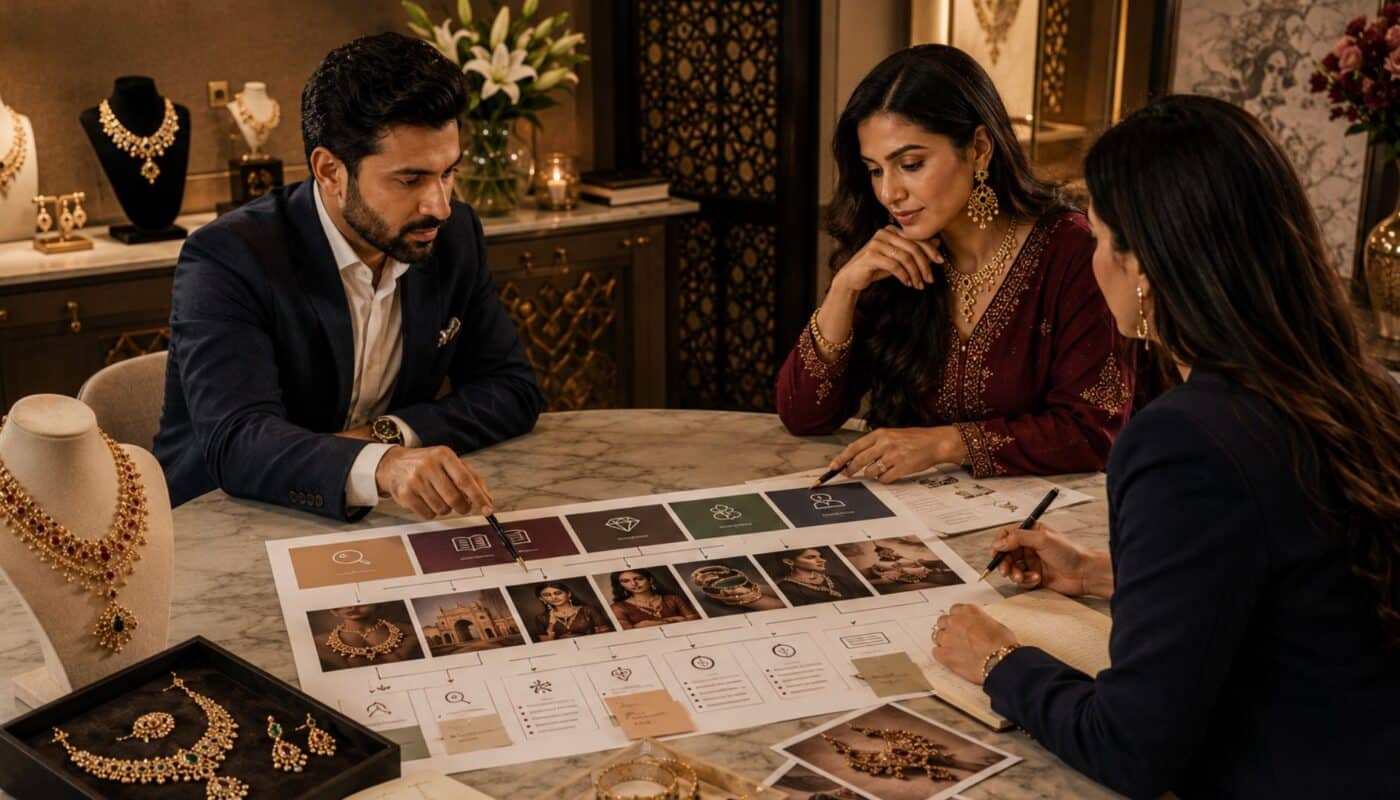
Begin by grouping keywords into four categories: learn, compare, enquire and buy. Do not judge them only by search volume. Consider how closely each phrase matches the service and whether the brand can create the page the buyer expects.
Next, assign one primary purpose to every important page. Avoid forcing educational, commercial and transactional content into the same section.
Review cultural language with someone who understands the tradition. Check product names, descriptions, imagery and campaign messages for accuracy and respect.
Then connect the pages. Educational articles should guide interested readers towards relevant collections or consultations. Collection pages should link to buying guidance, bespoke services and contact options.
A digital marketing agency can support keyword mapping, content planning and conversion tracking, but the jeweller should remain closely involved in cultural context, design language and customer experience.
Finally, review performance by intent. Compare traffic, engagement and enquiries for each category so future Digital marketing decisions are based on commercial relevance rather than visibility alone.
Common Mistakes in Cultural Jewellery Search Strategy
One mistake is targeting broad jewellery keywords that attract volume without cultural or commercial relevance. Another is using culturally specific terms on pages that provide no meaningful explanation or suitable product.
Brands also lose trust when every page sounds promotional. Educational searches should receive genuine information before a sales message appears.
Another problem is creating several pages for near-identical keywords. This can divide relevance and make the site difficult to navigate. Group related terms around one clear purpose where possible.
Finally, avoid copying language from competitors without checking whether it reflects your own process. Bespoke jewellery depends on distinction.
Turning Search Understanding into Luxury Enquiries
Strong Digital marketing for cultural jewellery begins with empathy. The brand must understand what the buyer is searching for, what the piece may represent and what reassurance is needed before an enquiry feels appropriate.
Search intent creates the structure. Cultural awareness gives the content integrity. Premium presentation and a clear consultation journey then turn interest into commercial opportunity.
When these elements work together, Digital marketing can attract fewer irrelevant clicks and more meaningful conversations. For bespoke jewellers, that is a stronger measure of growth than visibility alone.
FAQ
Search intent is the goal behind a search. A buyer may want to learn about a tradition, compare jewellery styles, find a specialist or book a bespoke consultation.
Cultural terms may carry ceremonial, personal or community meaning. Brands need to understand that context so content remains accurate, respectful and useful.
Detailed service pages, collection pages, pricing guidance, bespoke process information, examples of craftsmanship and clear consultation routes can support high-intent searches.
Broad terms can support awareness, but they may attract people with little purchase intent. More specific phrases often connect more closely with qualified enquiries.
Brands should track consultation requests, qualified enquiries, calls and movement towards service pages alongside rankings and traffic.